
Why legal software decisions go wrong
Nothing about a legal technology purchase is casual. These are the failure modes EvaLynx is built to remove.
- Legal evaluations stall for months in InfoSec and privilege review
- Requirements live in a partner's inbox instead of a scored framework
- Vendors invest in RFPs and demos with no visibility into where they stand
- Committee members score from different, undocumented assumptions
- Post-purchase, nobody can reconstruct why a platform was chosen
One process both sides of the table trust
EvaLynx serves legal technology vendors and the legal departments and law firms evaluating them in the same structured workflow.
Built for legal buying committees
General Counsel, Legal Ops, Legal IT, InfoSec, and Procurement each score what they actually own. No more single-threaded evaluations that stall at security review.
Legal-specific evaluation templates
Start from expert criteria sets for eDiscovery, CLM, ELM, legal research, and legal AI — including privilege handling, outside counsel guidelines, and bar-compliance requirements.
Transparency vendors can act on
Vendors see exactly which requirements are unmet and what evidence is missing, instead of being ghosted after a demo with no explanation.
Expert evaluation frameworks, ready on day one
Every category ships with a scored criteria set covering functionality, security, privilege handling, commercials, and implementation risk. Adopt one and adapt it — you never start from a blank page.
eDiscovery & Litigation Support
Collection, processing, review, and production of electronically stored information for litigation and investigations.
Decision owner: Litigation Support Manager / Director of eDiscovery
Contract Lifecycle Management
Authoring, negotiation, approval, execution, and post-signature obligation management for commercial contracts.
Decision owner: General Counsel / Head of Legal Operations
Legal Research & Intelligence
Primary law, secondary sources, citator services, docket analytics, and judicial or litigation trend intelligence.
Decision owner: Director of Library & Research Services
Enterprise Legal Management & e-Billing
Matter management, outside counsel spend, invoice review against billing guidelines, budgeting, and accruals.
Decision owner: Legal Operations Director / Legal Finance Manager
Document & Knowledge Management
Document management, version control, matter-centric filing, email management, and knowledge reuse for legal teams.
Decision owner: Legal IT Director / Chief Knowledge Officer
Legal AI Assistants
Generative AI for drafting, summarization, contract review, deposition preparation, and legal question answering.
Decision owner: General Counsel / Head of Legal Innovation
IP & Trademark Management
Patent and trademark portfolio docketing, prosecution workflow, annuity payments, and IP analytics.
Decision owner: Chief IP Counsel / IP Operations Manager
Entity Management & Compliance
Legal entity records, corporate governance, board materials, registered agent services, and regulatory filings.
Decision owner: Corporate Secretary / Compliance Director
Law Firm Practice Management
Case and client management, time capture, trust accounting, and billing for law firms and small practices.
Decision owner: Firm Administrator / Managing Partner
Legal Intake & Workflow Automation
Self-service legal request intake, triage, routing, approval workflow, and legal front-door automation.
Decision owner: Head of Legal Operations
Everything a legal evaluation actually requires
Structured criteria, committee scoring, documented evidence, and a defensible record of why the decision was made.
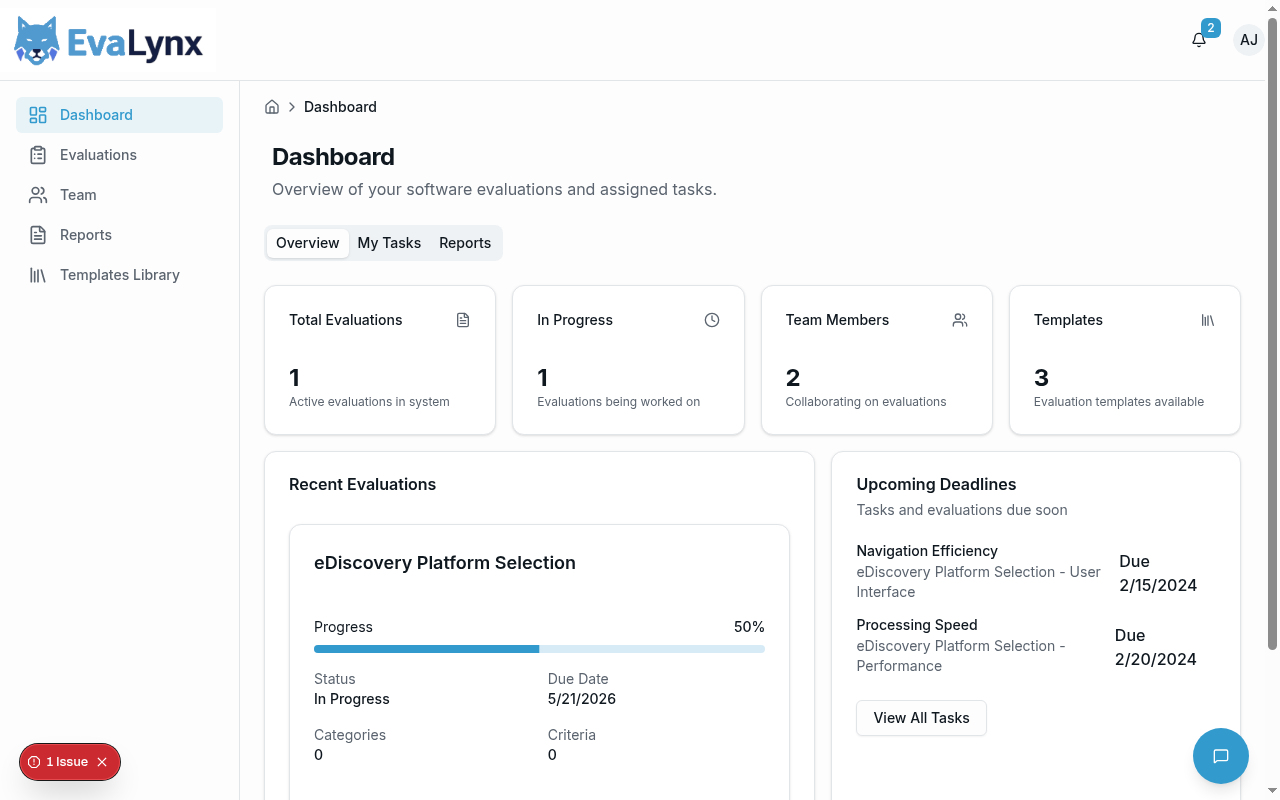
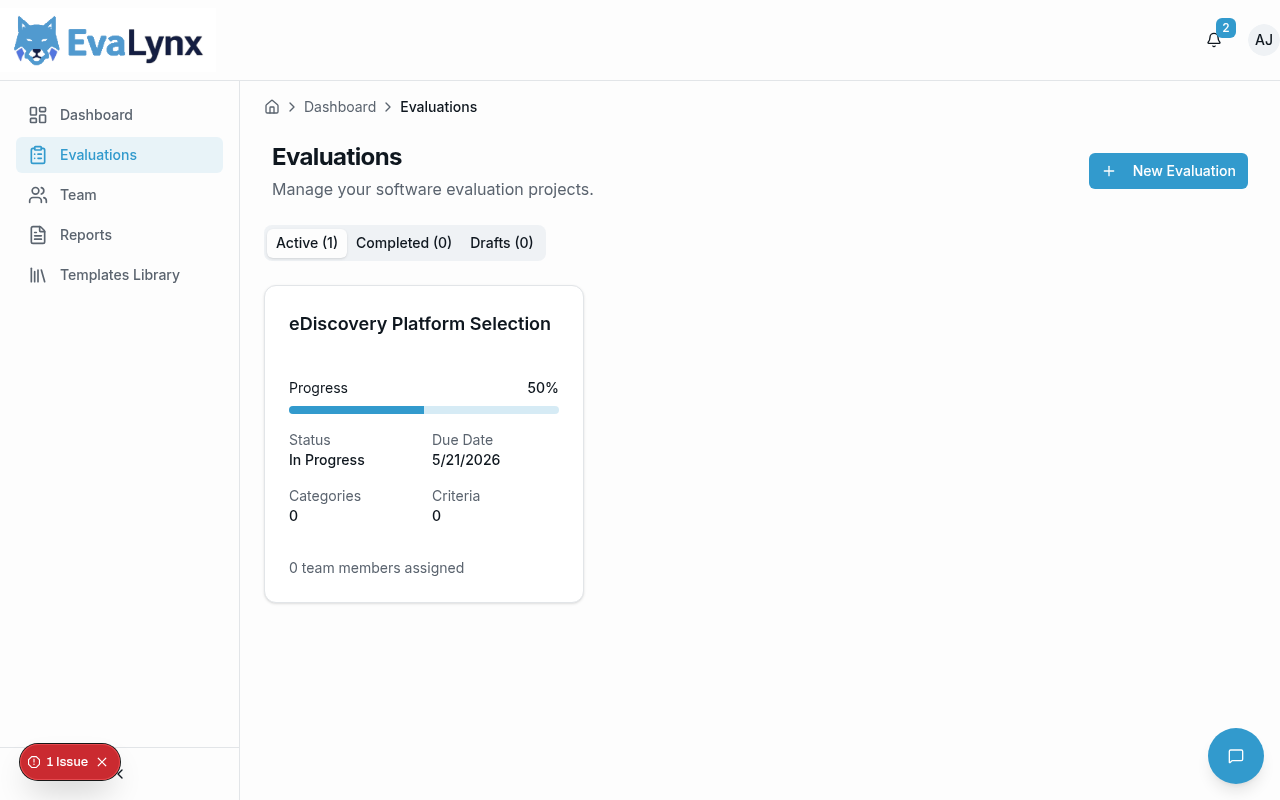
Define evaluation goals, create test categories and subcategories, and establish weighted criteria for objective analysis.
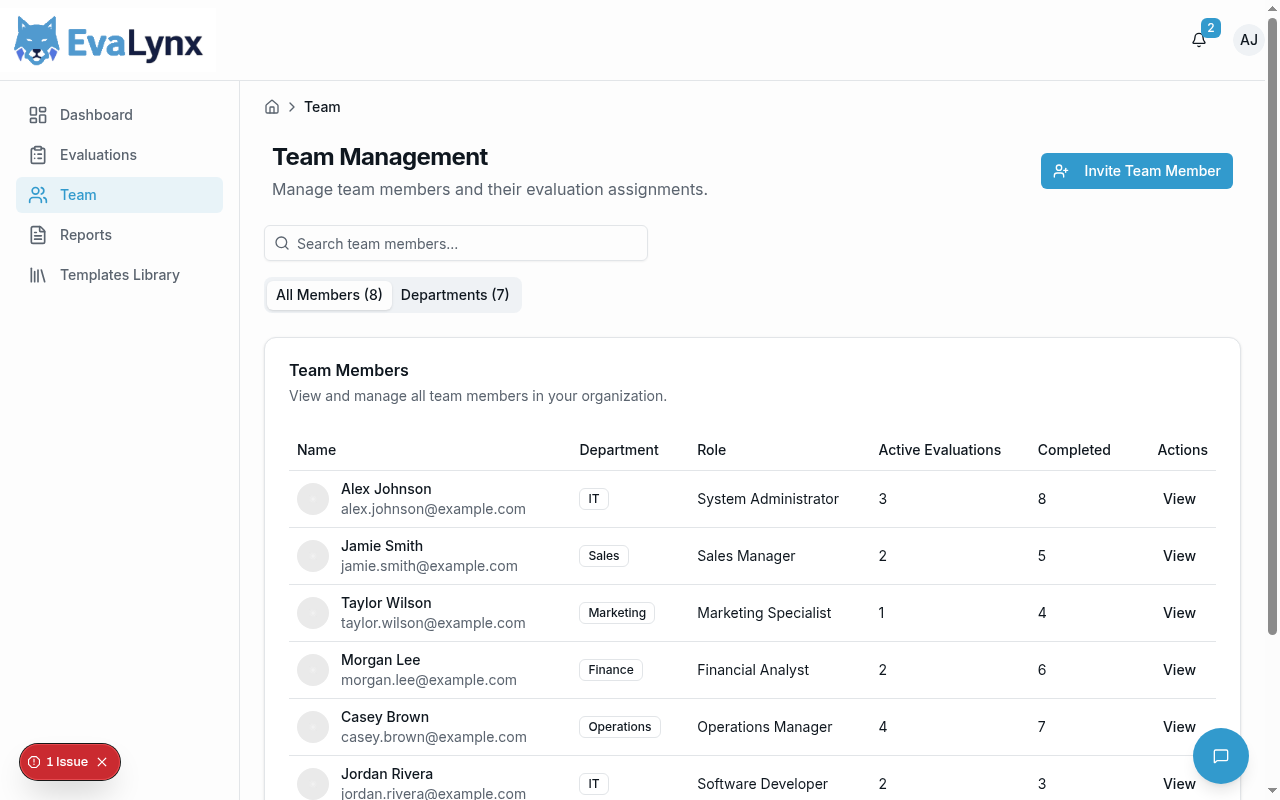
Assign test criteria to team members and track progress throughout the evaluation process in real-time.
Let AI suggest evaluation criteria, assist with scoring, and generate comprehensive comparison reports.
Assign importance weights to criteria and score test results on a scale of 1-5 for objective, data-driven analysis.
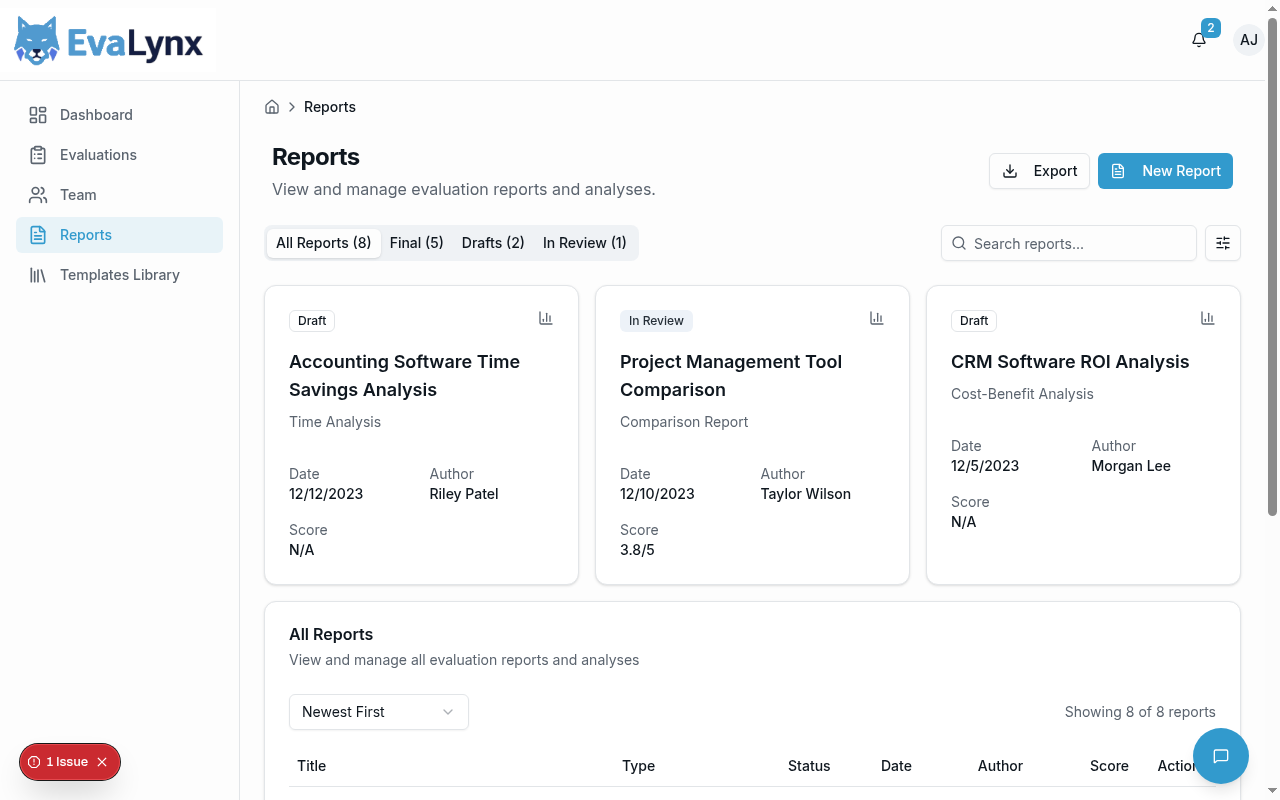
Collect provider responses, evidence, and documents in one place, with AI summaries and missing-evidence detection.
Create and manage evaluation templates with customizable criteria, weighted scoring, and team assignments.